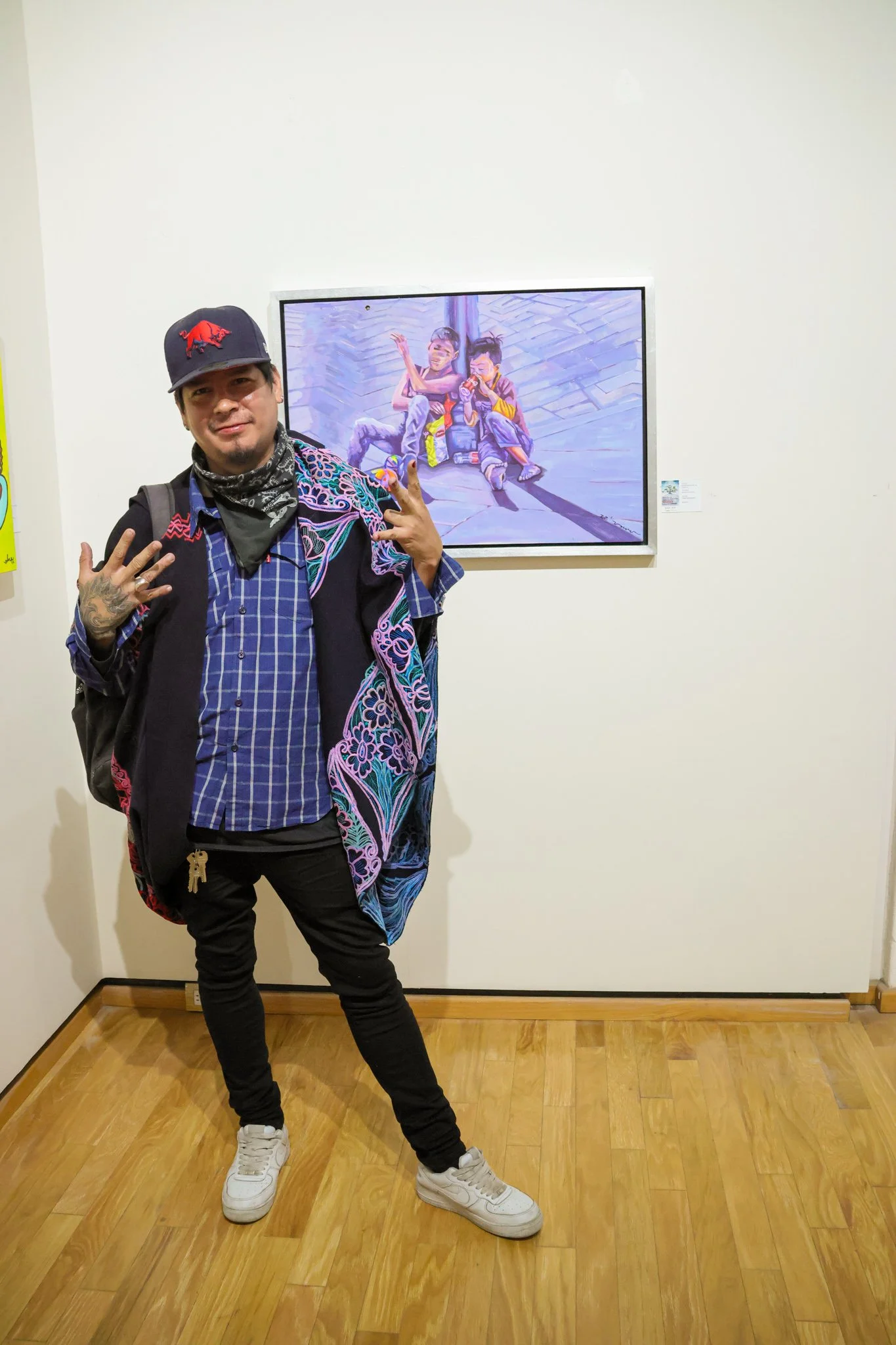
Jaime Barragan
In Memorandum
Non Serviam: La Estética de la Resistencia
Jaime Barragán Román
Pintor | Cuernavaca, Morelos, 1982–2025
Jaime Barragán Román fue un artista y un ser humano para quien la honestidad no era un principio: era una forma de vida. Pintaba, pensaba y actuaba desde una misma raíz ética, sin fisuras y sin disfraces. Su coherencia entre lo que creía, lo que decía y lo que plasmaba en su obra lo convirtió en una figura incómoda para algunos y profundamente luminosa para quienes lo conocieron de cerca. Jaime vivía con una integridad rara en este mundo: una que exigía mirarse sin concesiones y vivir con honestidad y lealtad.
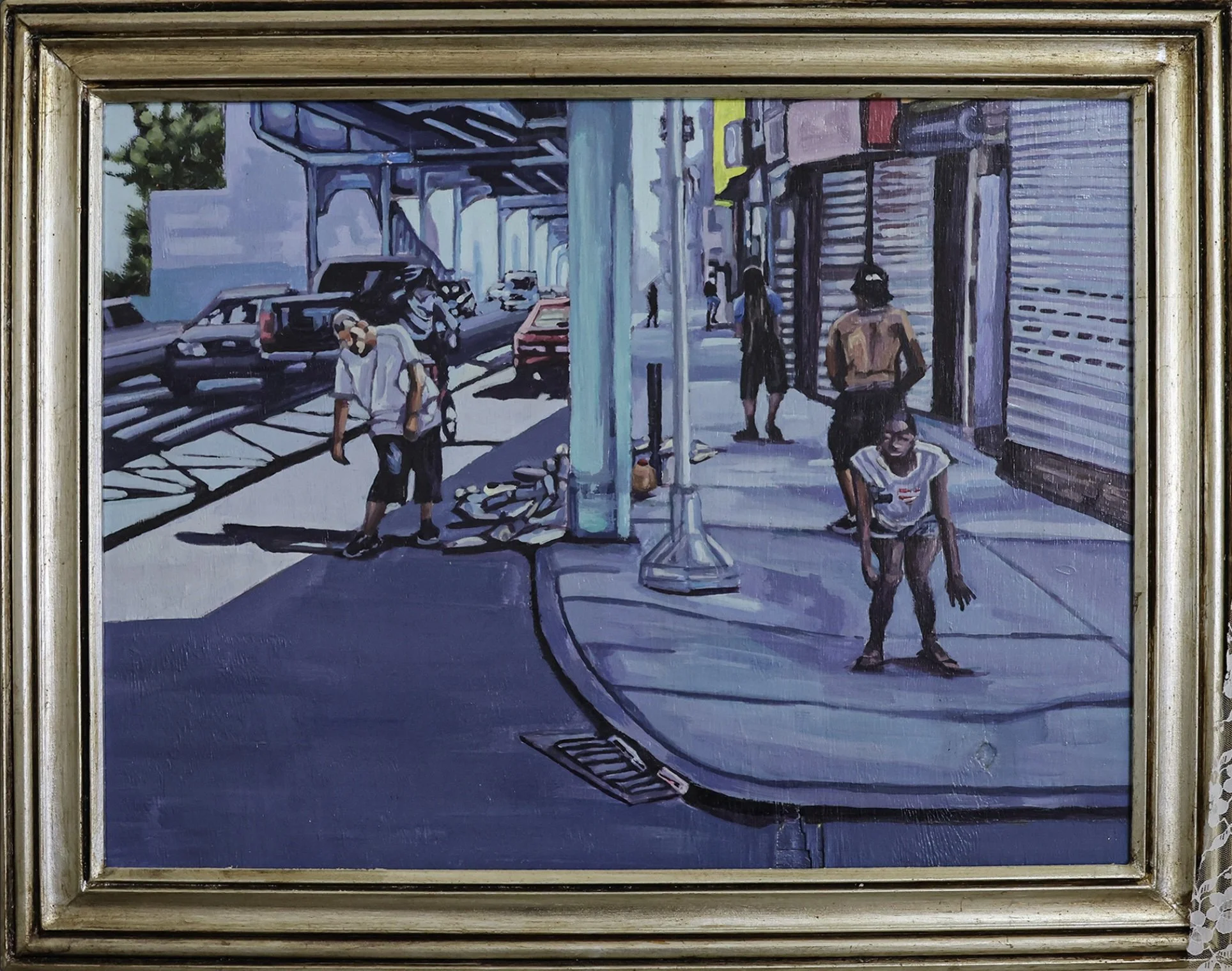
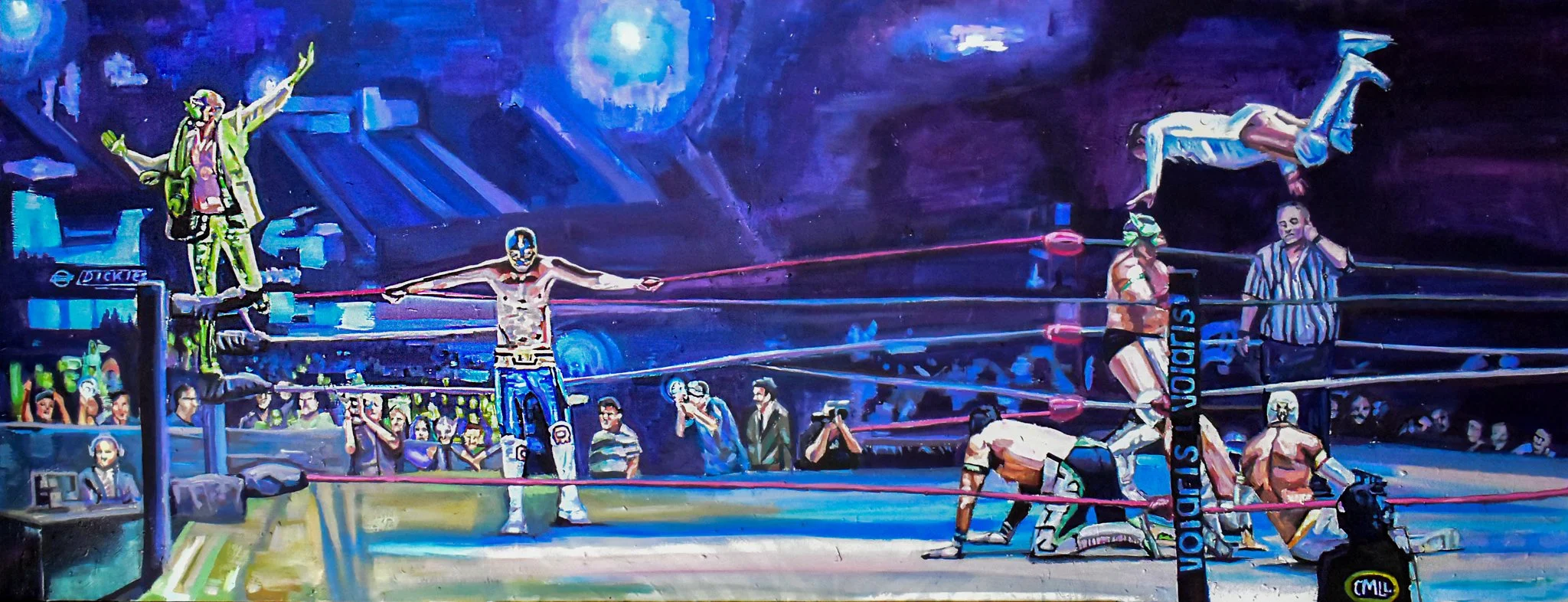
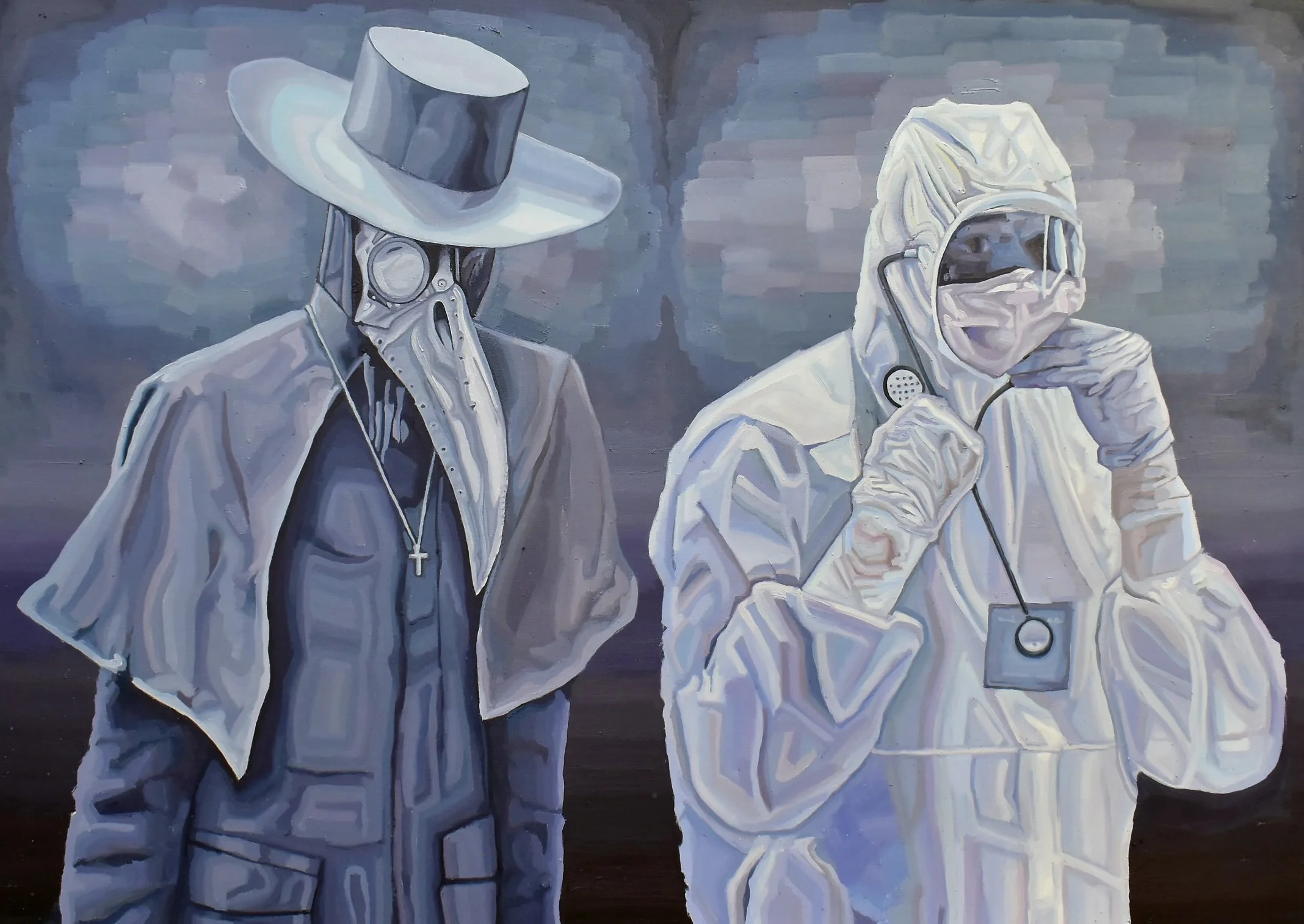
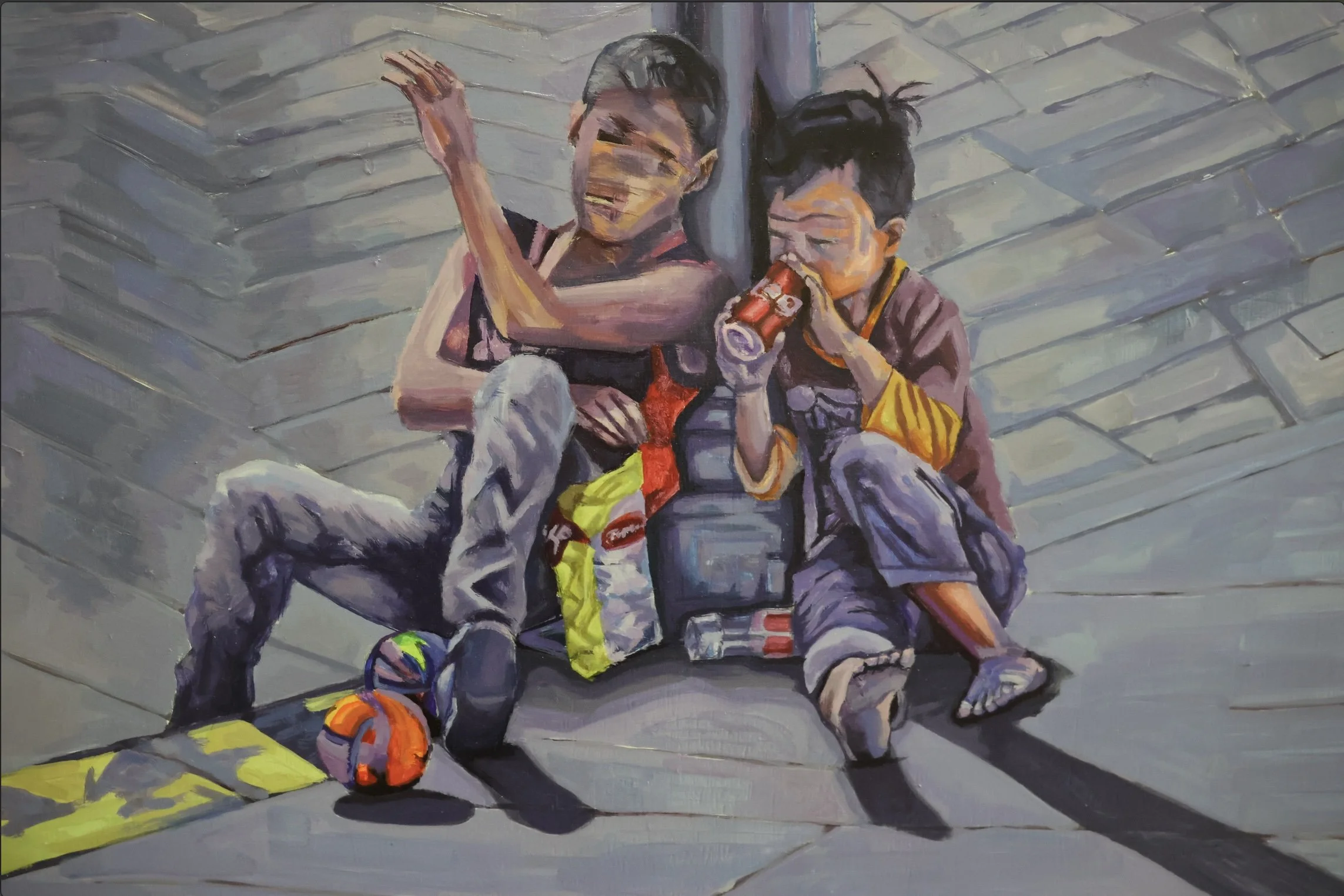
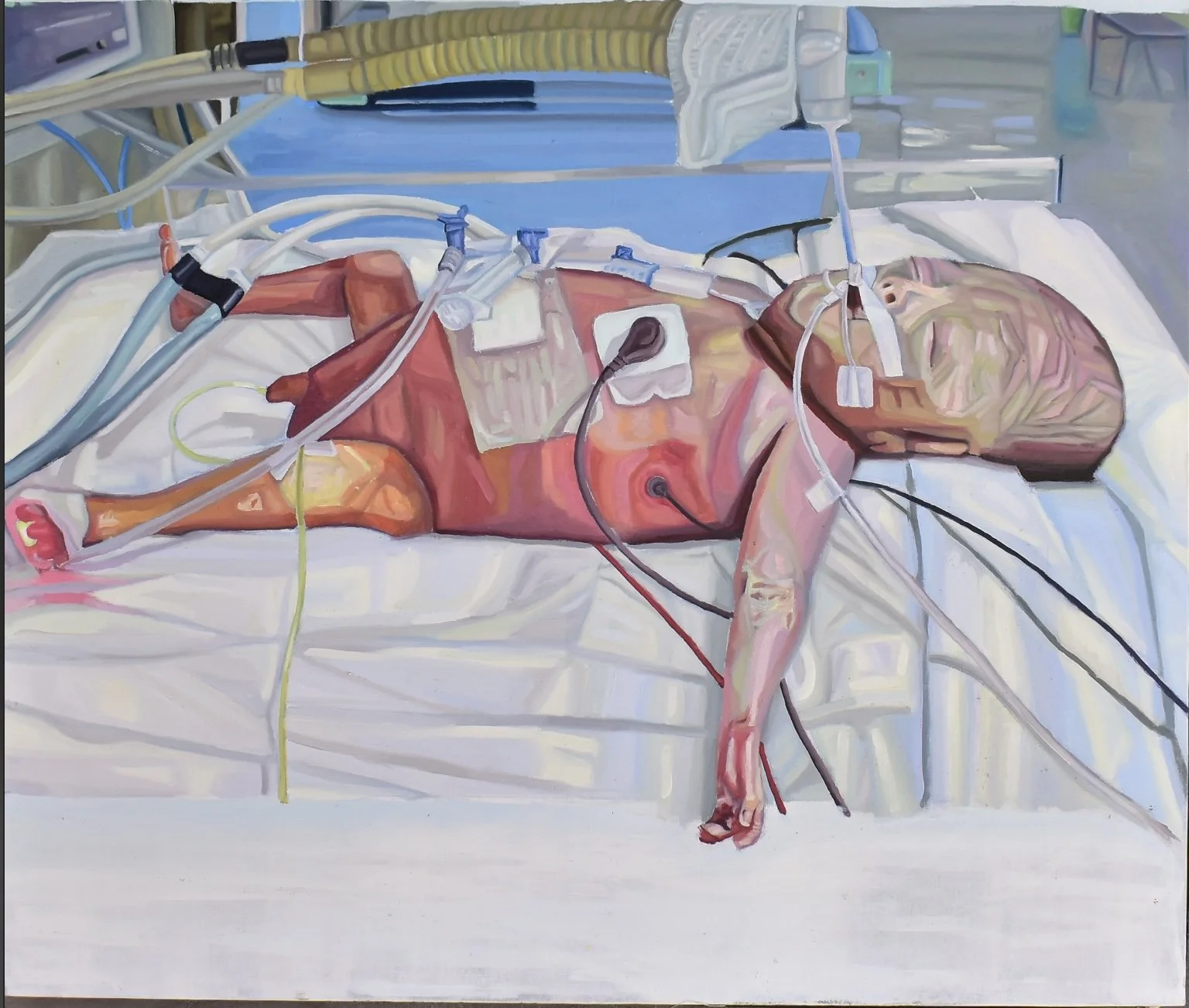
Su obra pictórica se ha descrito como crítica, política y profundamente social, pero sería injusto reducirla solo a su dimensión ideológica. En el centro de su trabajo existía una pulsación humana: una necesidad de nombrar los horrores que fracturan a la sociedad —la desigualdad económica, el racismo, el clasismo, el abuso de poder, el fascismo expuesto y latente, el conservadurismo violento, la supremacía blanca y la ignorancia militante disfrazada de cruzada anti–socialista o anti–marxista—, pero también una convicción de que el arte podía ser espejo, herida, memoria y posibilidad.
Jaime vivía bajo la certeza de que la ética también es estética. Su sinceridad era tan radical que atravesaba su forma de mirar el mundo, sus relaciones afectivas y cada gesto con el que hablaba de lo que amaba: el arte, la música, la comida, la dignidad, la justicia, la gente que escogió como su familia de verdad. Quienes estuvieron cerca de él disfrutaron su personalidad; quienes realmente lo conocieron entendieron con claridad su intensidad feroz, sin concesiones, sin medias tintas, sin reservas de ningún tipo. Amaba con la misma fuerza con la que pintaba.
Egon Schiele escribió: “Los cuerpos poseen una luz propia que consumen para vivir: arden desde dentro; no son iluminados por nada externo.” Jaime entendía esa frase como un modo de existir. Su luz no provenía del exterior: nacía desde lo más profundo de sí, una llama interna que lo movió y lo consumió. Se dejó quemar por esa luz —su rigor moral, la pasión que lo conducía a crear, la intensidad de afecto que entregó a quienes verdaderamente amó— y su obra lleva impresa esa combustión íntima.
Formado en el Instituto Allende en San Miguel de Allende y posteriormente en el INBA, construyó un lenguaje visual propio: áspero, frontal, vibrante; un lenguaje que no buscaba agradar, sino despertar. Sus trazos, colores y figuras llevan el eco de las noticias internacionales que escuchaba al pintar, y la intensidad de los himnos peronistas y del punk que acompañaban su trabajo en el estudio; juntos, funcionaban como base para sus manifiestos visuales que reclaman la obligación de cuestionar, de pensar más allá del privilegio, de preguntarnos qué significa ser humano en un mundo que normaliza la crueldad. Su pintura no solo registra la violencia estructural: la confronta, la denuncia y la revela.
Jaime tenía una postura lúcida frente a la muerte: no la temía, pero tampoco la romantizaba. Le preocupaba más la idea de vivir sin convicción que la de dejar de existir. Vivir sin apegos. Para él, cada obra era una posición moral frente al tiempo, una forma de resistir al olvido y de negarse a la indiferencia. Por eso su pintura no muere con él: su obra sigue creciendo, dialogando y confrontando, precisamente porque nace de alguien que entendió que la violencia, el odio, el abuso de poder y la estupidez organizada son ciclos que se repiten. En un mundo donde los horrores regresan con nuevas formas, su mirada seguirá siendo contemporánea. Jaime pintó para este presente, pero también para el que vendrá; su legado seguirá tocando esas heridas que la humanidad se empeña en repetir y que solo pueden enfrentarse con conciencia, con memoria y con resistencia.
Participó en exposiciones en México y Europa, colaboró con espacios independientes y comunitarios, y estableció en San Miguel de Allende su última residencia artística, donde formó parte activa de Casa Aurora. De agosto a octubre de 2025 participó en sus últimas exposiciones, ampliando el eco de su pensamiento y su sensibilidad.
Jaime Barragán Román falleció el 21 de octubre de 2025, pero su obra permanece como una advertencia y un recordatorio: la conciencia nunca debe apagarse. Su legado exige que sigamos siendo honestos con nuestros pensamientos, que no normalicemos la injusticia, que nos incomodemos frente a los horrores que lastiman a la humanidad y que entendamos que el arte es, siempre, resistencia; que nunca debemos servir a las estructuras establecidas, y que reclamemos nuestra libertad, como él siempre lo hizo. Su vida fue un no rotundo a la obediencia; su obra, un sí absoluto a la verdad que no consuela, que incomoda, que continúa viviendo como y donde él siempre quiso: en la memoria que no se rinde—desde donde, en un acto de resistencia y con fuerza, nos demanda:
Ardan hasta volverse luz interna. No sirvan. No se sometan.
¡Non serviam!
—Tania Noriz
Semblanza curatorial
Non Serviam: The Aesthetics of Resistance
Jaime Barragán Román
Painter | Cuernavaca, Morelos, 1982–2025
Jaime Barragán Román was an artist—and a human being—for whom honesty wasn’t a principle but a way of inhabiting the world. He painted, thought, and acted from the same ethical root, without fissures or façades. The coherence between what he believed, what he said, and what he inscribed in his work made him unsettling to some and deeply luminous to those who knew him intimately. Jaime lived with a rare kind of integrity—one that demanded looking at oneself without concession and living with honesty and loyalty.
His pictorial work has been described as critical, political, and profoundly social, but reducing it to an ideological dimension would be unfair. At the center of his practice there was a human pulse—a need to name the horrors that fracture society: economic inequality, racism, classism, abuses of power, overt and latent fascism, violent conservatism, white supremacy, and the militant ignorance disguised as anti-socialist or anti-Marxist crusades. But there was also a conviction that art could be mirror, wound, memory, and possibility.
Jaime lived under the certainty that ethics is also aesthetics. His sincerity was so radical it shaped his way of reading the world, his relationships, and every gesture with which he spoke about what he loved: art, music, food, dignity, justice, and the people he chose as his true family. Those who stayed close to him enjoyed his personality; those who truly knew him understood the ferocity of his intensity—without softening, without half-measures, without reservations. He loved with the same force with which he painted.
Egon Schiele once wrote: “Bodies have their own light which they consume to live: they burn; they are not lit from the outside.” Jaime understood that sentence as a way of existing. His light did not arrive from the outside—it burned from deep within, an internal flame that moved him and consumed him. He allowed himself to be burned by that light—by his moral rigor, by the passion that drove him to create, by the force of affection he offered to those he truly loved—and his work carries that intimate combustion.
Trained at the Instituto Allende in San Miguel de Allende and later at the INBA, he built a visual language of his own: raw, frontal, vibrant—a language not interested in pleasing but in waking. His marks, colors, and figures carry the echo of the international news he listened to while painting, and the intensity of Peronist hymns and punk anthems that filled his studio; together they became the base of his visual manifestos—works that claim the responsibility to question, to think beyond privilege, to ask what it means to be human in a world that normalizes cruelty. His painting does not simply register structural violence: it confronts it, denounces it, and exposes it.
Jaime held a lucid stance on death: he did not fear it, nor did he romanticize it. He was far more concerned with the idea of living without conviction than with ceasing to exist. For him, each work was a moral position against time, a way of resisting forgetfulness and refusing indifference. That is why his painting does not die with him: it continues to grow, to speak, to confront—precisely because it comes from someone who understood that violence, hatred, abuse of power, and organized stupidity are cycles that return. In a world where horrors reappear in new forms, his gaze remains contemporary. Jaime painted for this present but also for the one still coming; his legacy continues touching those wounds humanity insists on repeating—wounds that can only be faced with awareness, with memory, with resistance.
He participated in exhibitions in Mexico and Europe, collaborated with independent and community spaces, and established his final artistic residency in San Miguel de Allende, where he became an active member of Casa Aurora. From August to October 2025, he took part in his last exhibitions, extending the reach of his thinking and his sensibility.
Jaime Barragán Román passed away on October 21, 2025, but his work remains as a cautionary tale: consciousness must never be dimmed. His legacy demands that we remain honest with our thoughts, refuse to normalize injustice, allow ourselves to be unsettled by the horrors that wound humanity, and understand that art is—always—resistance; that we must never serve established structures, and instead claim our freedom, as he always did. His life was a resounding no to obedience; his work, an absolute yes to the truth that does not soothe, that unsettles, that keeps living exactly where he always wanted it to: in the memory that refuses to yield—from where he cries out in one great act of resistance and commands us:
Burn until you become inner light. Do not serve. Do not submit.
Non serviam!
—Tania Noriz
Curatorial Statement